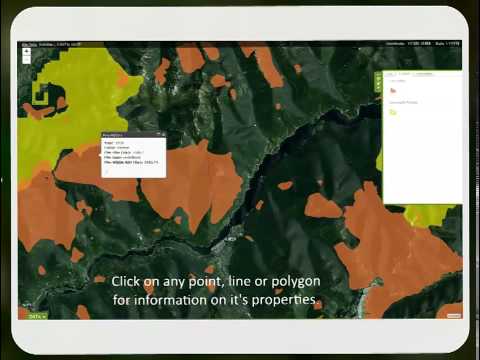
 Digital Basin Quick Start

CLIMATE CHANGE ADAPTATION KNOWLEDGE BRIEFS
The Rural Development Institute (RDI), with support from the Rural Policy Learning Commons and the BC Real Estate Foundation have written 3 knowledge briefs relating to climate change adaptation. The knowledge briefs, short summaries of the key points from academic and grey literature, aim to help those looking to better understand this complicated topic.
- Rural Climate Change Adaptation Part I: this first of the 3 knowledge briefs tackles the question of what is adaptation and how adaptation is done.
- Challenges of Climate Change Adaptation Part II: this second brief of 3 knowledge briefs looks specifically at the challenges rural communities face when it comes to climate change adaptation and offers examples and resources.
- Climate Change Adaptation Planning to Implementation Part III: this final knowledge brief is all about implementation, with several case studies, an appendix of key resources, and links to video clips.
________________________________________________________________________
CLIMATE ADAPTATION INDICATORS PROJECT: PILOTING THE SoCARB SUITE IN 2016 AND BEYOND
The purpose of this RDI-led project is to pilot, evaluate, refine, and support uptake of the State of Climate Adaptation and Resilience in the Basin (SoCARB) indicator suite. SoCARB was developed in 2014 as a result of a research partnership between Columbia Basin Trust’s Communities Adapting to Climate Change Initiative and the RDI. It is a “made in the Basin-Boundary” approach to measuring progress in adapting to climate change. It is anticipated the resulting indicator suite will serve both the State of the Basin initiative and the related planning and performance measurement needs of individual communities and the region as a whole.
*Phase 1 pilot communities include: Kimberley, Rossland
________________________________________________________________________
CLIMATE ADAPTATION INDICATORS PROJECT: LAYING THE GROUNDWORK
The RDI partnered with Columbia Basin Trust’s Communities Adapting to Climate Change Initiative on a project in 2014, which sought to measure the Basin’s progress on climate adaptation and climate resilience using indicators. Indicators are helpful for informing residents, organizations, and governments regarding key trends in climate adaptation and resilience, facilitating understanding of complex issues, evaluating the effectiveness of various adaptation measures, and motivating change.
Technical work was completed and three knowledge products related to the project were created:
Summary Report: Measuring Progress on climate change adaptation in the Columbia Basin
Final Report: Indicators of climate adaptation in the Columbia Basin
Climate resilience indicator literature review
The goals of the project was to develop a suite of regional-level climate change indicators to measure community climate adaptation efforts, assist communities in understanding climate change and adaptation, help decision makers in the Basin make informed decisions and measure the success of adaptation efforts. The resulting State of Climate Adaptation and Resilience in the Basin (SoCARB) indicator suite builds on current State of the Basin indicators that effectively can measure an aspect of climate adaptation.
The primary audiences for this work are local governments and engaged community members in the Columbia Basin. As such, local government representatives—both staff and decision makers—were engaged early in the process to ensure that the products developed were useful for them. Secondary audiences include Basin residents, businesses, and community groups, as well as other organizations, governments and researchers in Canada interested in measuring climate adaptation using indicators.
Moreover, the conceptual models developed and process utilized to create the SoCARB should be applicable to other communities or agencies in Canada interested in developing their own “State of Climate Adaptation” program.
________________________________________________________________________
This project is receiving financial support from our sponsors:

